


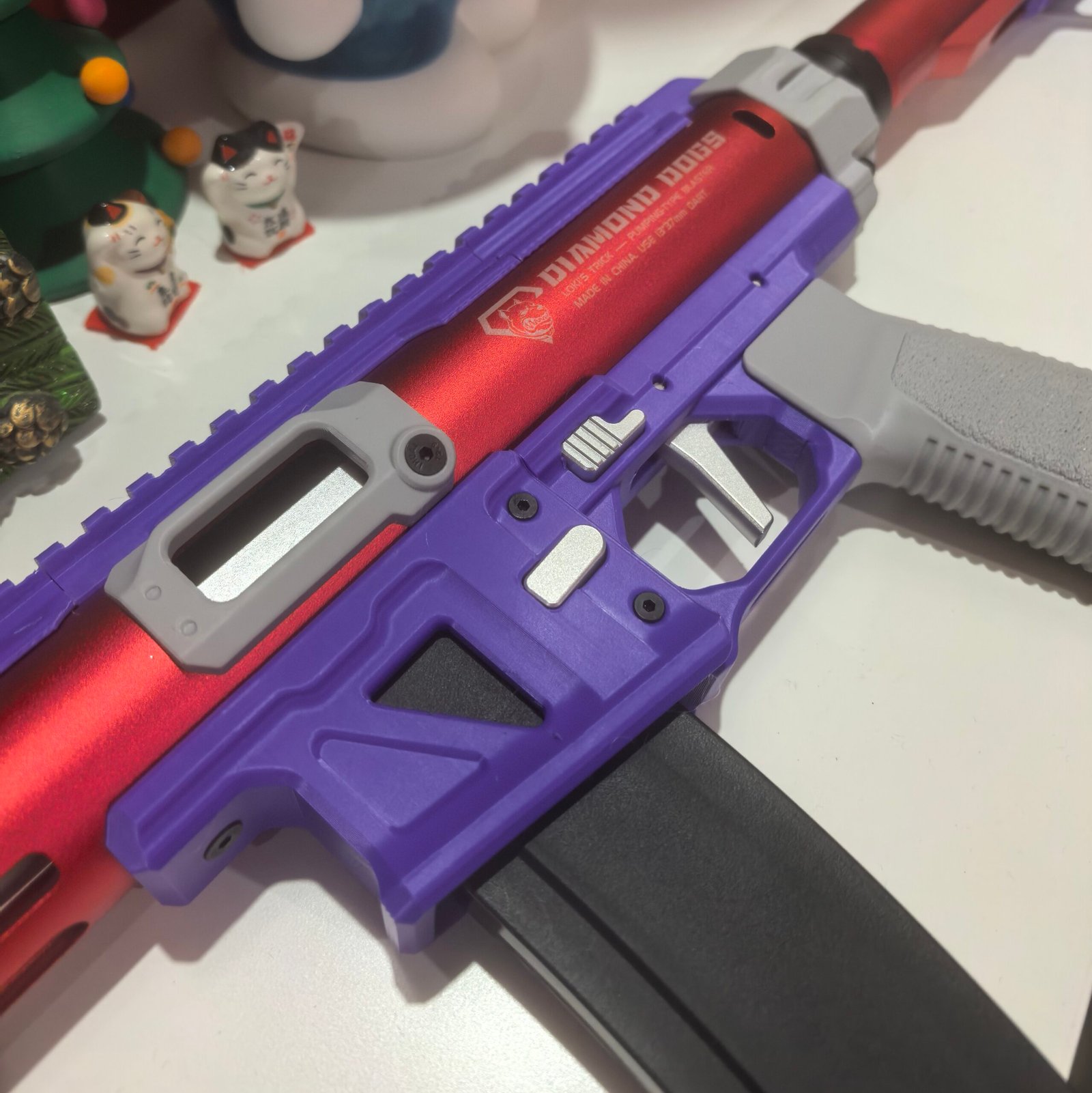
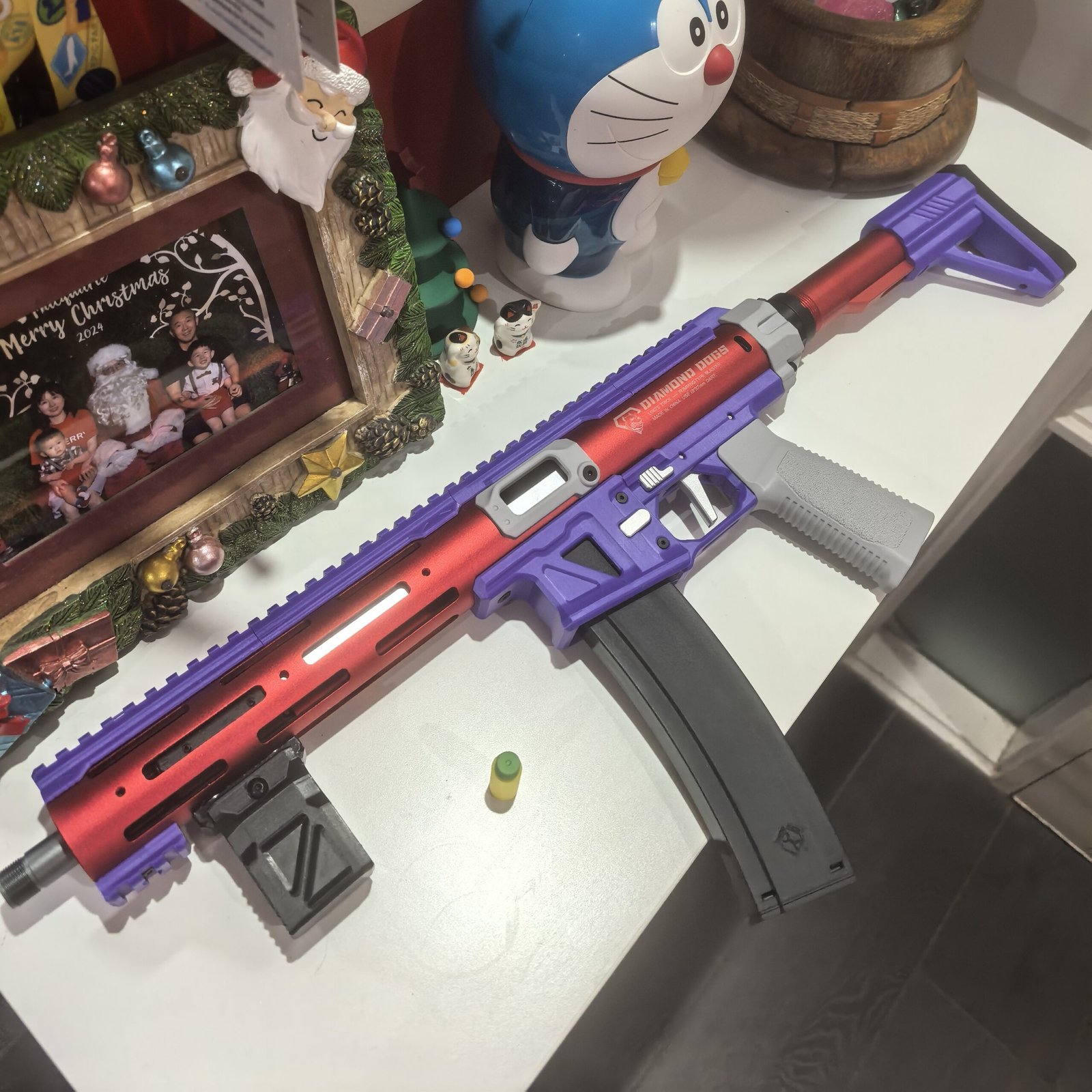


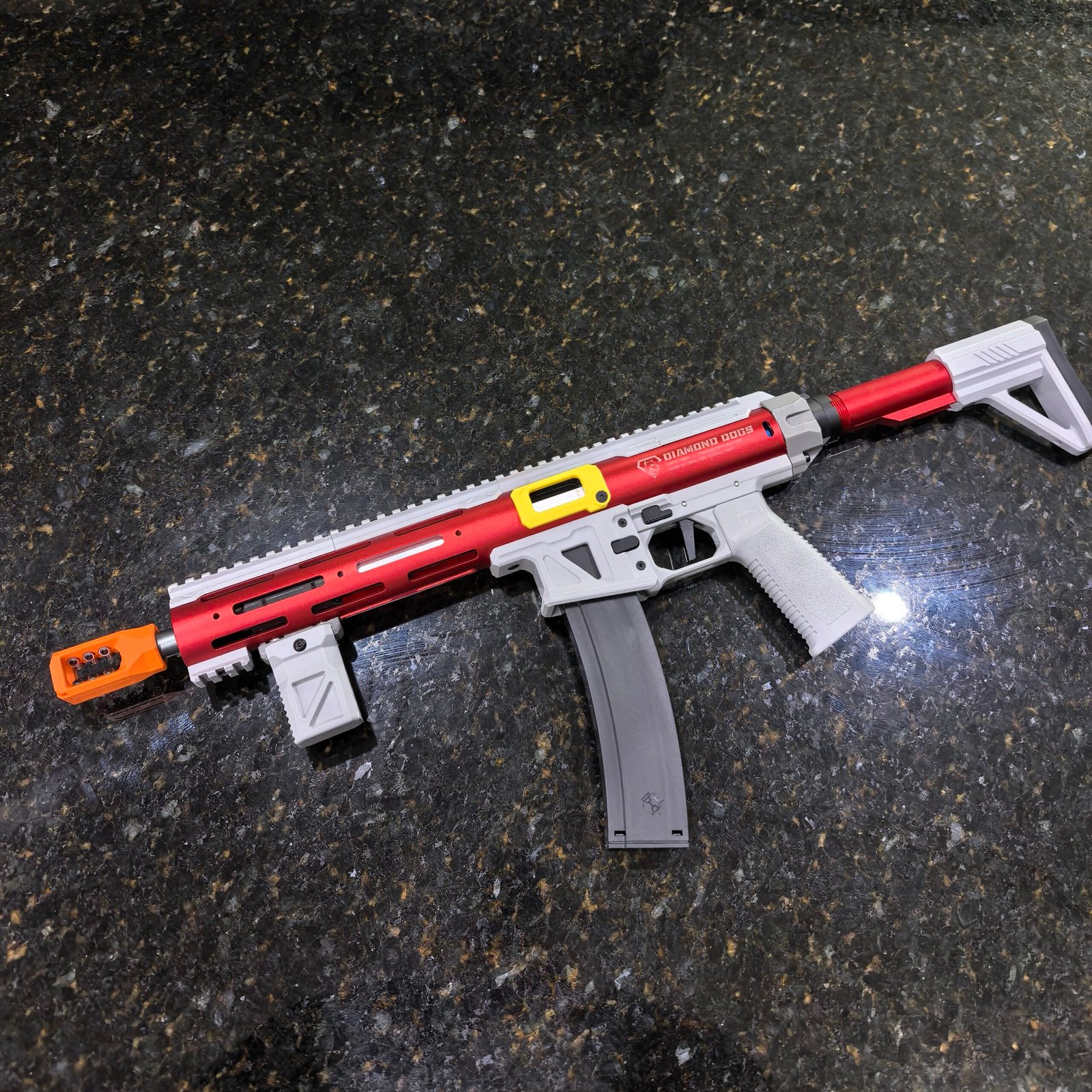
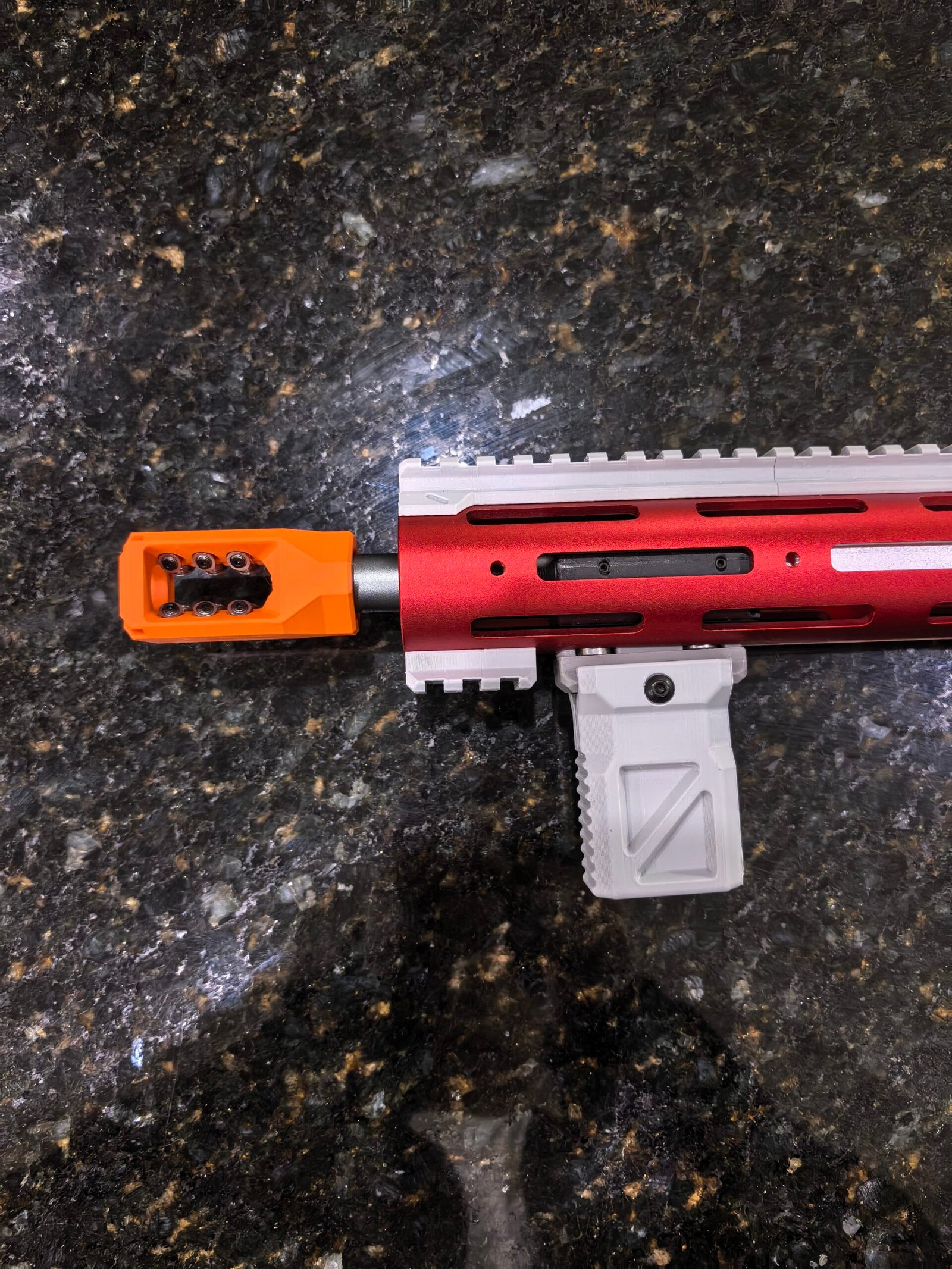
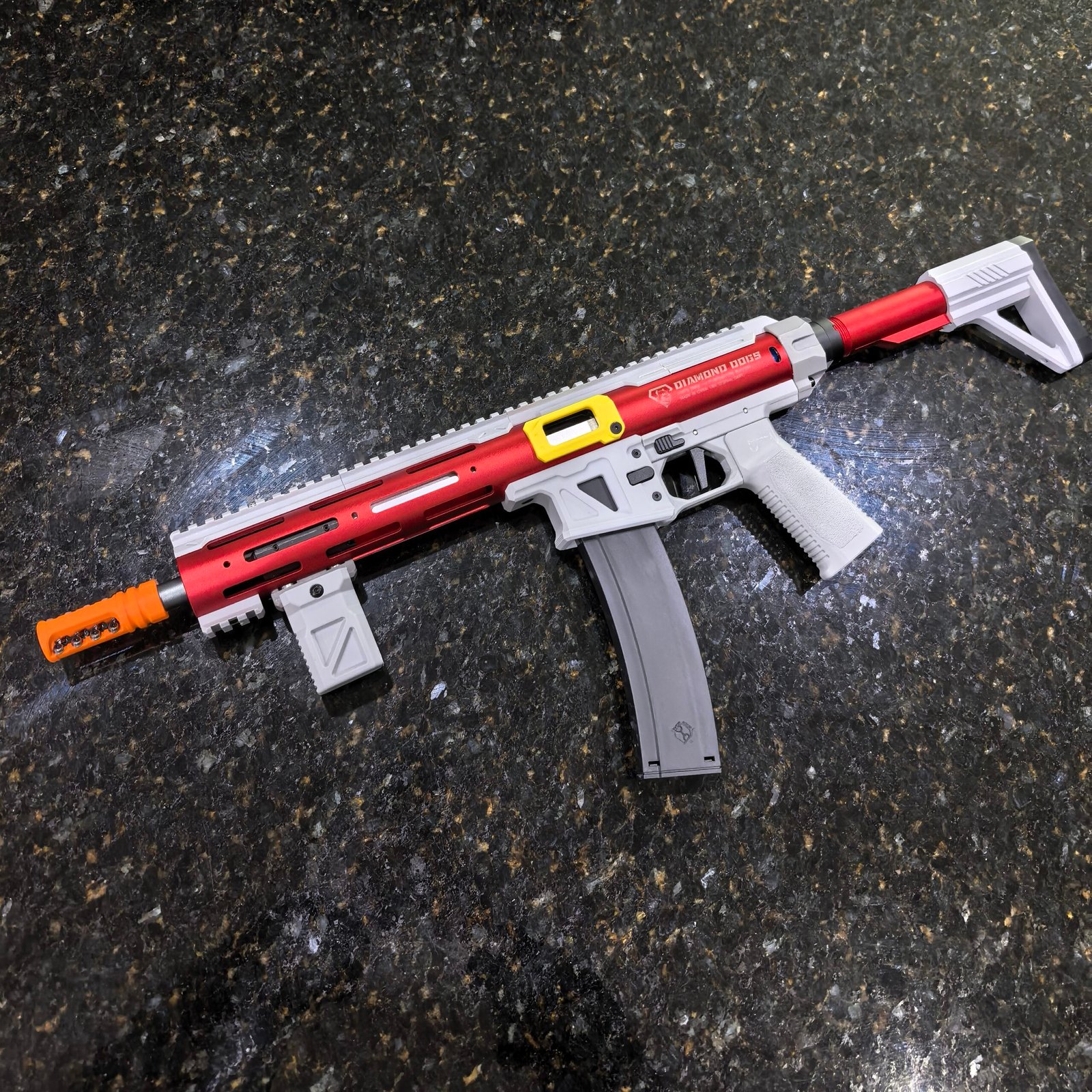



The Loki is a CNC-heavy springer with excellent build quality and a very short priming stroke.
Patrick from Melbourne, aka Plane on Discord, first introduced me to the Loki and helped with testing and feedback. His input played a big part in getting this blaster onto the store.
The Loki uses CNC parts extensively, with the CNC main body itself also serving as the air cylinder. Combined with the short priming stroke and solid construction, it has a particularly refined feel for a ~200 FPS springer.
There are still plenty of printed components, leaving plenty of room for colour customisation around the CNC parts.
The printed components can be customised in different colours to contrast with the CNC body. See the colour diagram for the available groups and choose your combination from the options above.
Updated 18/10/2026
For better compatibility with the 1.7 spring — because who doesn’t want to keep their Loki running strong at 250 FPS?
With the help of players who already own a Loki, we’ve narrowed it down to just two areas that need improvement before it’s pretty much perfect: the priming slider and the spring seat.
Here’s the progress so far:
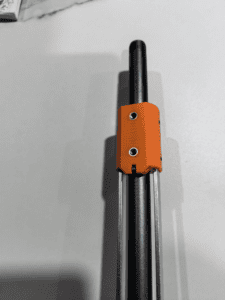
Adding heat-set inserts definitely makes the priming slider significantly stronger. One player has already been putting the upgraded version through its paces, and so far, so good.
For the spring seat, my previous design was printed in separate TPU and PETG sections. Mine has survived all of my dry-fire testing without any issues, but the first player who helped me test it did manage to break one. A special thanks to Peter Ho in Sydney — this guy can literally prime it hundreds of times a day!
I suspect part of the issue may have been that it was my first time printing with TPU, and the spring seat I sent him was literally the very first prototype.
There are still plenty of ways to improve it, but the timing couldn’t be better: Polymaker recently released a new material called G-Flex PETG/TPU, specifically designed for impact resistance. If it performs anything like what they show in their demo videos, it could be the perfect material for the Loki spring seat.
A test spool is already on the way.
Stay tuned!
Updated 2/10/2026
The 1.7 spring has exposed a weakness in the slider design. The priming handle is screwed directly into the printed slider, and with the extra load from the 1.7 spring, those screw holes will eventually wear out.
I’m planning to add two heat-set inserts to reinforce that connection and test it again. I really want to make the 1.7 spring a reliable option, so I’ve paused sales of it for now.
If you’re specifically looking for a 250 FPS Loki, I’d recommend holding off on ordering for now. The hardware is already on the way, but I’ll need some time to test the new setup properly.
Updated 17/09 2026
The 1.7 spring test is complete, and the fps is right where I expected it to be, as shown below.
The test was conducted using the Loki’s standard double-threaded barrel. Switching to a 310 mm Worker inner barrel may result in slightly higher FPS.
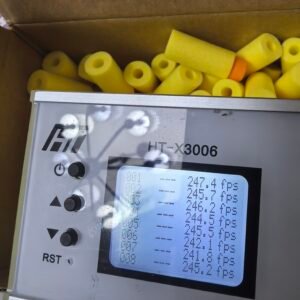
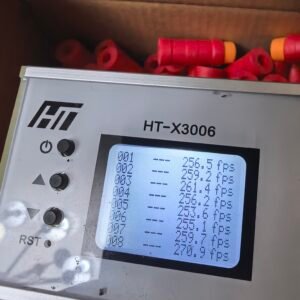
I wouldn’t call the priming effort “easy,” but it’s definitely manageable for regular play. The Loki has a very short priming stroke, so the key is to use a quick, decisive pull rather than trying to prime it slowly. Do that, and there’s really no issue.
After all, the FPS is very appealing.
Updated 23/08 2026
1. Compact Size, Huge Potential

I tested it with a 1.8 spring that I sourced myself, paired with a spring seat printed in TPU 90A+PETG. So far, I haven’t had any failures or damage.
I didn’t expect such a tiny blaster to be capable of hitting this kind of FPS. Of course, if you don’t work out, the 1.8 spring is probably going to be a no-go.
282 FPS is the highest I’ve hit so far, although I didn’t get a photo of that particular reading. With Worker Bambu 1g foam darts, it consistently sits at 260+ FPS. With unringed darts, it generally gets around 233–240 FPS. You can find more detailed test results on our Facebook page.
Diamond Dogs has also started sourcing their own 1.8 springs for the Loki. For now, we won’t be offering our own 1.8 spring. We’ll wait until DD’s version has been fully tested before making a 1.8 spring available.
Our 1.6 spring has been tested with no issues
2, Exceptional consistency with Bambu Darts

This result was achieved with a custom-made 1.6 spring and Worker Bambu 1g darts. Consistency drops noticeably when using unringed Worker darts at this fps.
With the standard 1.5 spring, expect ~190 FPS with a good air seal.
Stronger spring options are currently being tested, along with a reinforced spring seat to suit the higher loads.
Performance can vary slightly depending on darts, barrel setup and individual build.
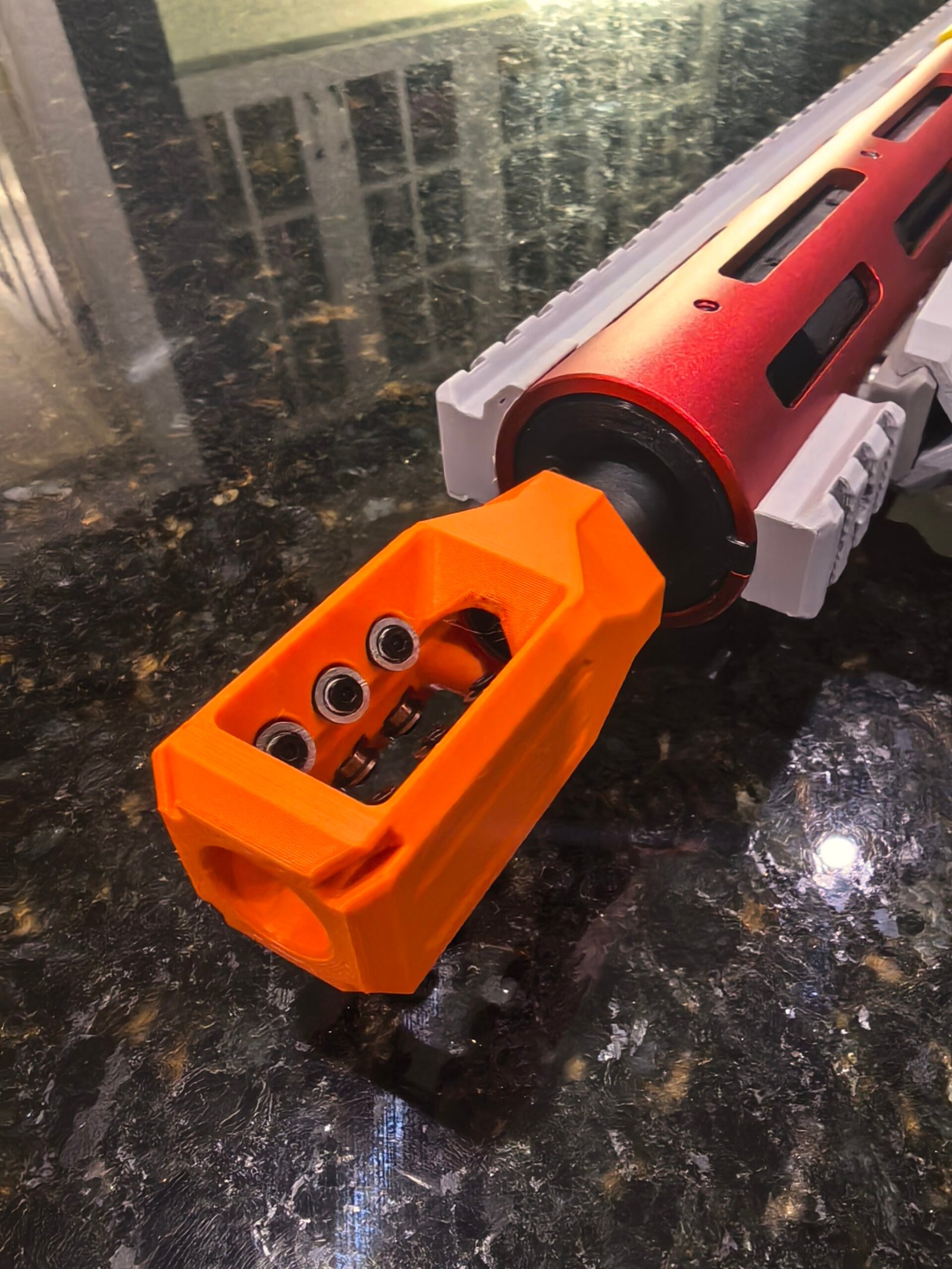
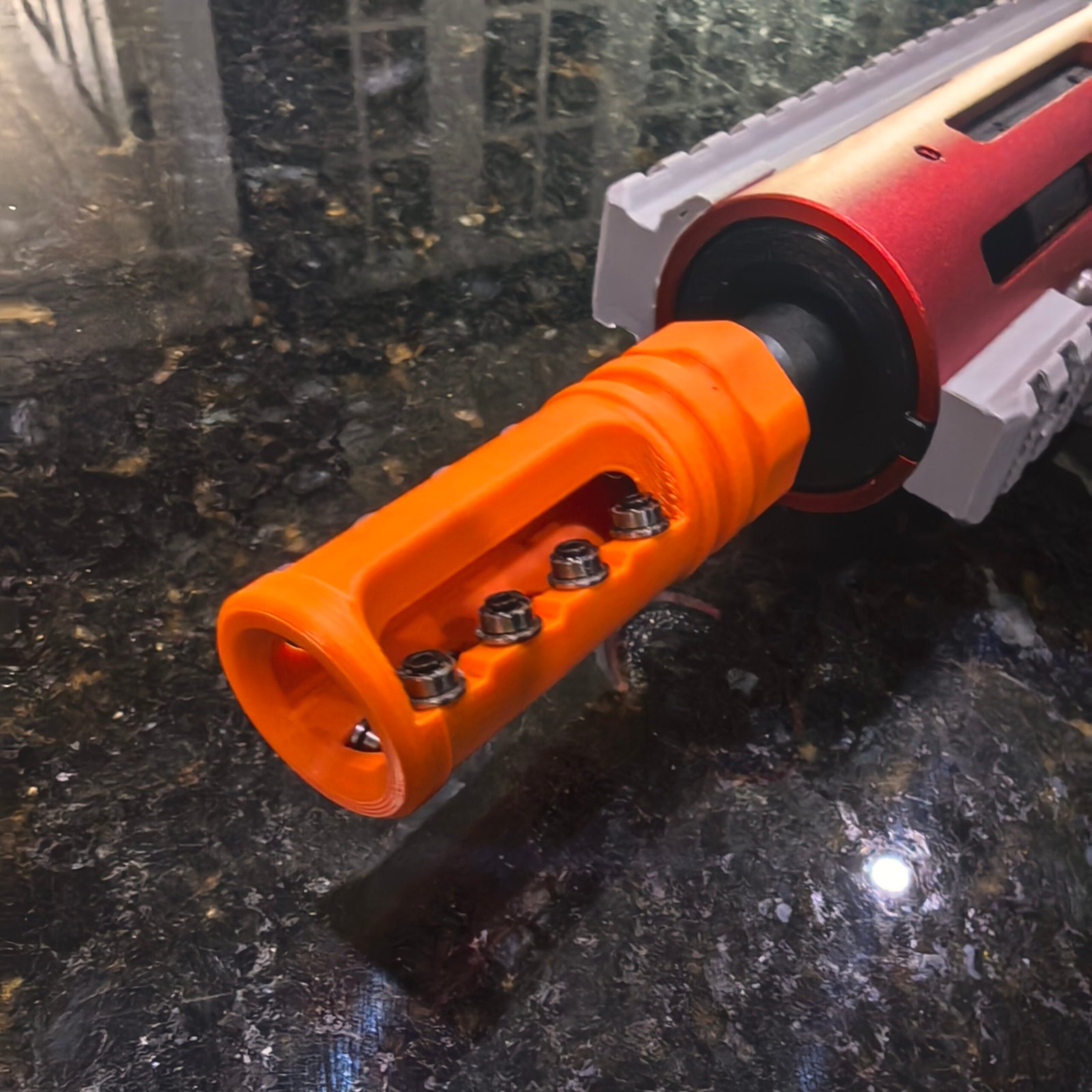
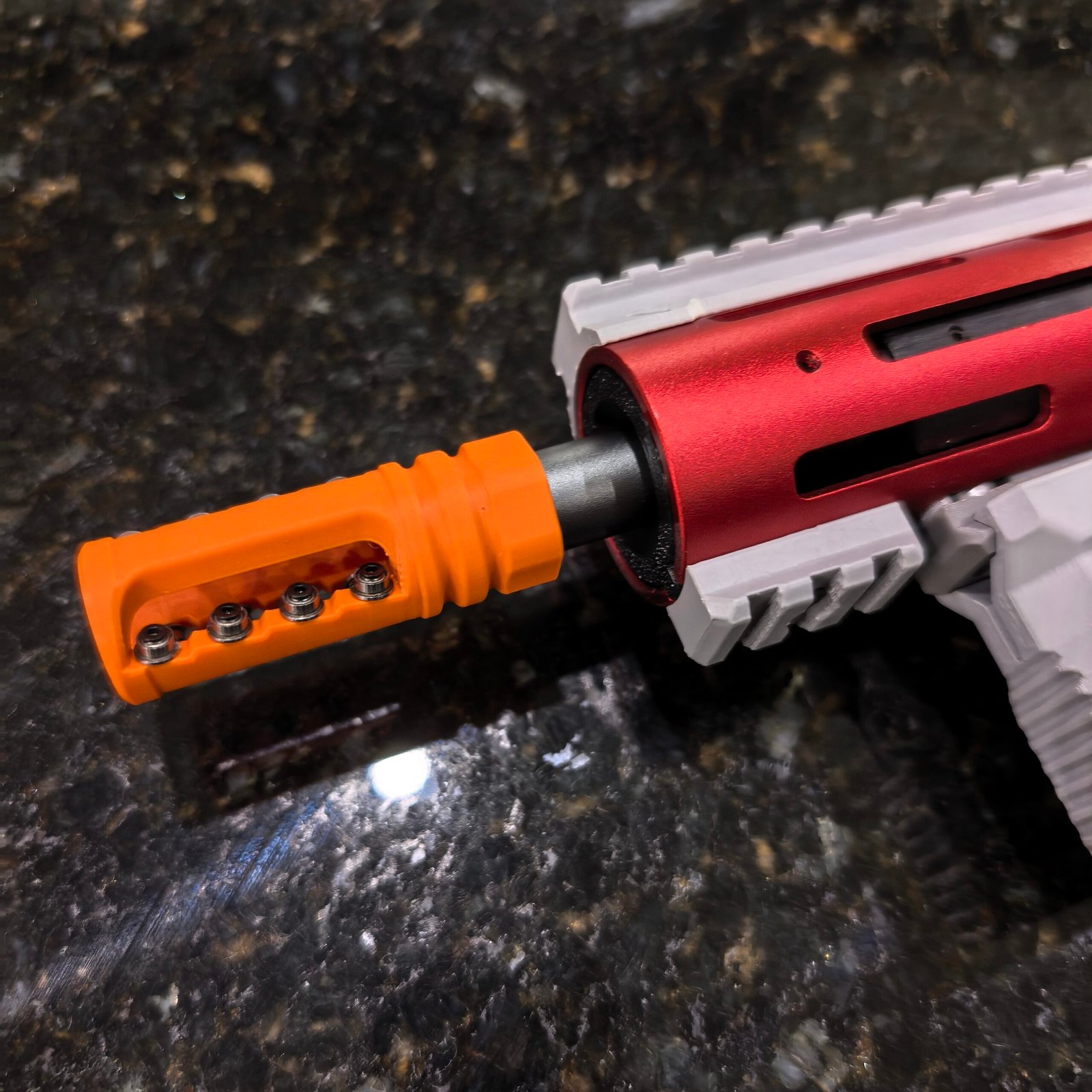
Like other Diamond Dog blasters, the Loki uses a barrel threaded at both ends. This allows compatibility with Diamond Dog’s unique threaded BCAR system.
While we do not currently offer Diamond Dog CNC threaded BCARs, we have two types of DD-authorized 3D-printed threaded BCARs, as well as the PewPewPew threaded BCAR.
The Loki’s includes a 250mm dual-threaded barrel and a printed threaded BCAR of your choice.
You may also choose to run a Worker 310mm barrel, which is compatible with the platform but is not included with this product.
AND
If a printed part is damaged or wears out, replacement parts can be provided. Whether the replacement and shipping are covered will depend on the specific situation.
AND
Updated 25/08/2026
Two tpu+petg printed spring seats are included.
This is planned as a regular production model, not a limited release.